FAQ
Does a higher FPS always mean smoother gameplay?
What's a CPU bottleneck?
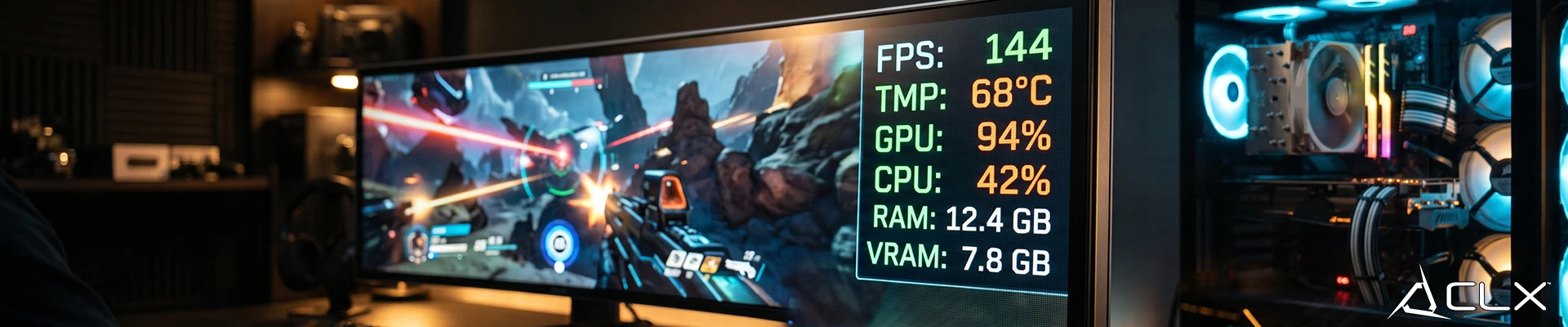
A CPU bottleneck happens when your GPU usage stays low under load even without a frame cap, meaning your processor can't feed it fast enough, and a faster GPU won't fix it.
Should I prioritize resolution or frame rate?
It depends on your hardware and the games you play. If your system can't
sustain your target frame rate at a given resolution, dropping resolution
usually helps more than any other single change.
Quick answer: A high frame rate number doesn't guarantee a smooth gaming experience. Response time, input lag, resolution, and connection stability shape how a game actually feels to play, often more than the FPS count on the box.
If you've shopped for a gaming PC, you've seen the FPS number plastered everywhere. It's the first thing sellers brag about and the last thing most buyer’s question. But FPS alone doesn't tell you if a game will feel responsive, look sharp, or run without hiccups online. Here's what else deserves your attention.
Why does response time matter more than FPS?
Response time is how fast your monitor's pixels change color, measured in milliseconds. A monitor with a high refresh rate paired with slow response time can still look blurry during fast motion, because the pixels can't keep up. For competitive games where you're tracking fast-moving targets, a sluggish response time can cost you a kill even if your FPS counter reads high.
Does a higher refresh rate always mean better gameplay?
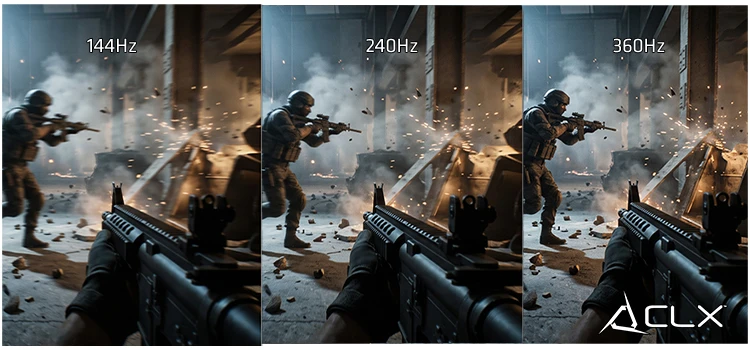
Not necessarily. Refresh rate determines how many times per second your screen updates the image, and pairing it with a matching FPS output gives you smoother motion. But chasing the highest refresh rate number available doesn't help if your system can't produce enough frames to use it, or if the game you play most isn't fast-paced enough to benefit. A 144Hz display driven by a steady, capped frame rate often feels better than an uncapped number bouncing all over the place.
How does resolution affect gaming performance?
Higher resolution means a sharper, more detailed image, but it also asks more of your hardware. Push resolution too high without the GPU to support it and your frame rate drops, even if everything else is dialed in. The goal isn't maxing out resolution; it's finding the point where visuals look great and frame rate stays steady for the games you actually play.
Why doesn't maxing out my GPU or CPU always help?
A component running at full tilt isn't automatically a good thing. If your GPU is pegged at 100% and you're still below your target frame rate, you've got a real case for a hardware upgrade. But if your GPU usage is low while your CPU works overtime, a faster graphics card won't fix anything. That's a CPU bottleneck, and no amount of GPU power solves it.
Why does ping matter as much as FPS in online games?
In online multiplayer, your connection to the server matters as much as how fast your PC renders frames. High ping means delay between your actions and what happens on screen, no matter how high your FPS reads locally. A stable, low-ping connection can make a modest frame rate feel more responsive than a high frame rate riding a shaky connection.
What should I actually look for?
Don't chase a single number. Look at response time, refresh rate matched to realistic frame output, a resolution your hardware can sustain, balanced CPU and GPU performance, and a stable connection. Together, these build the gaming experience FPS alone can't deliver.
Not sure how your current setup stacks up, or want a build that's balanced across all these factors instead of just one big number? See verified configs on our configurator and order a build that is tested before they ship.