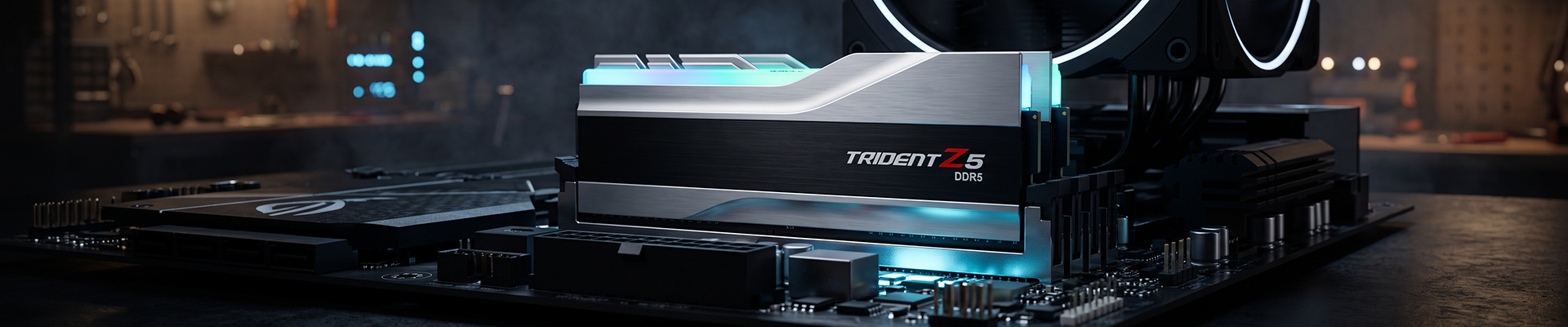
Every few months, someone in a build forum posts a screenshot showing DDR5-8000 beating DDR5-5600 by double digits, and the RAM speed myth gets a new life. Let's sort out what's actually happening.
How RAM Speed Affects Gaming
RAM speed shortens the time the CPU waits for data. Lower latency, faster memory bandwidth, quicker frame delivery to the GPU. That part's real. The question is how much it matters once you're actually playing.
Modern titles built around CPU-heavy systems, think large open worlds with lots of NPCs or physics calculations, lean on memory bandwidth more than older, simpler engines did. Total War: Warhammer III and Cities: Skylines II are two examples where CPU and memory subsystem performance show up clearly in benchmarks, since both games push heavy simulation loads through the CPU rather than the GPU.
DDR5 also just runs faster than DDR4 at the platform level. Current CPUs on AM5 (Ryzen 9000 series) and LGA1851 (Core Ultra 200 series) are DDR5-only now, so DDR4 isn't likely part of that comparison anymore for anyone building new.
What Matters More Than RAM Speed
GPU model determines your frame rate ceiling in almost every title. An RTX 5070 and an RTX 5090 will produce very different numbers in Cyberpunk 2077 at 4K no matter what RAM you pair with them. RAM speed doesn't change that math.
CPU model and core architecture matter next. A Ryzen 9 9950X3D with its 3D V-Cache handles instruction-heavy games differently than a standard Ryzen 9 9950X, and that gap is bigger than anything RAM speed alone produces.
RAM capacity also outranks RAM speed for most people. Running 16GB in a modern AAA title with background apps open can cause stutter that no amount of extra MHz will fix. Move to 32GB and the stutter often disappears, RAM speed unchanged. If you're choosing between 32GB of DDR5-5600 and 16GB of DDR5-6800, take the capacity.
When Faster RAM Actually Shows Up
There are real scenarios where RAM speed earns its keep:
High refresh rate competitive play. At 144Hz and above in esports titles like Valorant or CS2, frame times get short enough that memory latency becomes a bigger slice of the total frame budget. This is where enthusiasts chasing every extra frame see the clearest gains.
CPU-bound genres. Strategy games, city builders, and simulation titles with heavy AI or physics calculations that lean on the CPU and memory subsystem more than the GPU. Faster RAM helps here more than in a GPU-bound shooter at 4K.
Systems already balanced elsewhere. If your GPU and CPU are well matched to your resolution and refresh target, RAM speed becomes one of the last real levers left to pull.
Outside those cases, upgrading from a solid mid-speed DDR5 kit to a premium high-speed kit tends to land in a low single-digit FPS range in most GPU-bound AAA titles at 1440p and 4K.
Where to Put Your Budget
If you're planning a new build or an upgrade, sequence it like this: GPU first, since it sets your frame rate ceiling. CPU second, especially if you're running competitive titles at high refresh rates. RAM capacity third, aim for 32GB on a current build. RAM speed goes last, worth the upgrade if you're already running strong hardware everywhere else and chasing the last few frames at high refresh.
Configure yours and save with CLX!